A couple days ago, I was playing the chords of "I Want You Back Again" with some approximation of the vocal melody on top of them. In doing so, I discovered something interesting about the first verse, which I then referenced the recordings to verify. The "feet" in the line "To stand on my feet" is sung to a C note. The song is in C minor, so this is the tonic note, the pitch that the key is based on. In the same way, the "feet" in the lyric symbolize the foundation, as it were, that the singer/speaker wishes to regain.
I knew off-hand that the Decca recordings (the single version and the alternate take* included on both The Decca Stereo Anthology and Zombie Heaven) are in C minor, but in referencing the version on Still Got That Hunger, I discovered that the Zombies actually raised the key to D minor there. The lyric is ever-so-slightly different ("Somebody help me / Stand on my feet" instead of "Somebody help me / To stand on my feet"), but the "feet" there are also sung to the tonic note.
---
*Oddly enough, what's termed the "alternate" take on The Decca Stereo Anthology and Zombie Heaven was actually recorded before the single version. The alternate version was recorded on 25 November 1964 as part of the sessions for the Zombies' first album, and the single version was recorded on 2 March 1965.
Friday, May 26, 2017
Friday, May 19, 2017
"I Know She Will"
I haven't been recording much lately (for this project or any others), but I've been practicing my recently acquired flute almost every day for about a month, so I thought I'd record "I Know She Will" with an actual flute (rather than the fake flute setting on my keyboard like I used to do). There are only seven pitches in the flute part in "I Know She Will" (F#, G, G#, A, B, C#, and D), so it's relatively simple. Because it's simple and because I'm not very good at flute yet, I've been playing it a lot. In my recording, I don't play the A G# F# phrase very cleanly because that's not the easiest transition to make at this tempo (at least not for me because I'm still a novice). This was the first time I recorded my flute playing, and I think I placed the microphone too close because my breathing is audible in between a few phrases. I feel I should also mention that I combined three takes. So my recording isn't the best, but the genuine instrumentation makes it feel like I'm a step closer in accuracy.

Thursday, May 11, 2017
"Helpless"
I recently listened to Out of the Shadows and realized something about "Helpless." A few years ago I discovered that some of the lyrics quote Elvis' "All Shook Up," and at the time I was just excited that I'd found such an obvious Elvis reference in a Rod Argent song. When I listened to it recently though, I realized the significance of that quotation.
The premise of the song is that the singer/speaker is unable to communicate with someone: "I just want to communicate / I try so hard but my tongue frustrates." The content of the Elvis quote fits the context of the song (the speaker/singer is "shaking" and "Can't seem to stand on [his] own two feet" because he can't communicate and therefore sees himself as "helpless"), but the fact that it's a quote also fits the song. The singer/speaker is having trouble "get[ting] through to you," so - with that Elvis quote - he's trying to use someone else's words rather than his own, hoping that perhaps that will allow him to "get through to you."
The premise of the song is that the singer/speaker is unable to communicate with someone: "I just want to communicate / I try so hard but my tongue frustrates." The content of the Elvis quote fits the context of the song (the speaker/singer is "shaking" and "Can't seem to stand on [his] own two feet" because he can't communicate and therefore sees himself as "helpless"), but the fact that it's a quote also fits the song. The singer/speaker is having trouble "get[ting] through to you," so - with that Elvis quote - he's trying to use someone else's words rather than his own, hoping that perhaps that will allow him to "get through to you."
Tuesday, May 9, 2017
"Another Day"
After I read the lyrics of "Breathe Out, Breathe In" in The "Odessey": The Zombies in Words and Images and realized that "falling" descends (which I wrote about here), I listened to the Breathe Out, Breathe In album again and found something else to write about. In "Another Day," the "crime" in "I don't want to waste my time / Fixing every crime" is sung with a melisma (to the notes F E D). Because it's sung with more syllables than it's spoken with, there's an implication of a multitude of crimes. It's as if multiple crimes are encapsulated in that three-syllable pronunciation. The "every" in the same line also hints at that plurality.
Monday, May 8, 2017
"Breathe Out, Breathe In"
As I was reading the lyrics for "Breathe Out, Breathe In" in The "Odessey": The Zombies in Words and Images last month, it occurred to me that there's a descending melody for the "falling" in the line "Catch the stars as they're falling." It was only recently that I lookt into this in order to find the specific notes. The melody for "they're falling" arpeggiates an A major chord in descending pitches: E C# A.
When I referenced the recording in order to write about this, I also discovered that the musical phrase to which "Watch the sun go down" is sung descends (F# F# E D C#), just like the sun's going down. In the next line, "Catch a little music in flight," the "flight" is sung with a melisma, starting with an E note and then moving up to an F#. Between that melisma and the ascending interval, there's something of a representation of the flying.
When I referenced the recording in order to write about this, I also discovered that the musical phrase to which "Watch the sun go down" is sung descends (F# F# E D C#), just like the sun's going down. In the next line, "Catch a little music in flight," the "flight" is sung with a melisma, starting with an E note and then moving up to an F#. Between that melisma and the ascending interval, there's something of a representation of the flying.
Wednesday, April 19, 2017
"Friends of Mine"
Since 2014, I've recorded a version of Odessey and Oracle every year, but when I started doing it this year, I kept finding parts that I wasn't playing very accurately. Rather than rush through it all and end up with a knowingly flawed version, I decided just to skip it altogether.
But, of course, because to-day's the 49th anniversary of the album's release, I listened to Odessey and Oracle (specifically, the 30th anniversary edition, which has both the stereo and mono versions of the album). Because it sounded easy, I thought I'd figure out the vocal parts for the chant of couples in "Friends of Mine," and while writing out the notation, I discovered something interesting.
First, here's the notation:

I should note while the whole chant of couples lasts eight measures, the second four measures are musically identical to the first four.
What I noticed while writing this out is that each couple has its own complete measure. For each couple (aside from Jean and Jim), there's a one-syllable name, "and," and a two-syllable name. That's four syllables, one for each beat in a measure, so each couple is musically represented as complete unit.
But, of course, because to-day's the 49th anniversary of the album's release, I listened to Odessey and Oracle (specifically, the 30th anniversary edition, which has both the stereo and mono versions of the album). Because it sounded easy, I thought I'd figure out the vocal parts for the chant of couples in "Friends of Mine," and while writing out the notation, I discovered something interesting.
First, here's the notation:

I should note while the whole chant of couples lasts eight measures, the second four measures are musically identical to the first four.
What I noticed while writing this out is that each couple has its own complete measure. For each couple (aside from Jean and Jim), there's a one-syllable name, "and," and a two-syllable name. That's four syllables, one for each beat in a measure, so each couple is musically represented as complete unit.
Wednesday, April 12, 2017
"A Rose for Emily"
A couple days ago, I was thinking about the unused mellotron part for "A Rose for Emily" (I figured out half of it last week). I'm not sure about the part for the third verse yet, but the part during the second verse is only five pitches:

I realized that these are the same five pitches that make up the entirety of the lead vocal melody for the chorus of "Maybe after He's Gone" ("Maybe after he's gone / She'll come back, love me again...")
Were that mellotron part used for the final version of "A Rose for Emily," it would have been yet an-other musical element that ties the songs on Odessey and Oracle together.

I realized that these are the same five pitches that make up the entirety of the lead vocal melody for the chorus of "Maybe after He's Gone" ("Maybe after he's gone / She'll come back, love me again...")
Were that mellotron part used for the final version of "A Rose for Emily," it would have been yet an-other musical element that ties the songs on Odessey and Oracle together.
Friday, April 7, 2017
"Maybe after He's Gone"
A couple days ago, I realized something about the bridge of "Maybe after He's Gone," specifically the line "All the days and all the nights." Colin Blunstone sings "All the days and" by himself (although I'm pretty sure his vocal is double-tracked), but then the backing vocals (I'm assuming it's both Rod Argent and Chris White) come in for "all the nights." There's a bit of staccato for that phrase too, and both of those things musically emphasize the "all." The additional voices sort of represent the multitude, and the insistence of that slight staccato is almost like a tally counting up the number of nights.
Thursday, April 6, 2017
"A Rose for Emily"
Yester-day, I learned the unused mellotron part for the second verse of "A Rose for Emily" (it's a bonus track on the 30th anniversary edition of Odessey and Oracle). I'd read about the song in The "Odessey": The Zombies in Words and Images, which reminded me that at some point I was going to figure out that mellotron part.
Figuring out the mellotron part actually helpt in figuring out the one piano chord I was missing for this section. For the most part, I learned the piano part from a vocal/guitar/piano book of Zombies songs from the Alfred Publishing Company. They said it's a Ddim7, but this didn't sound right to me. I knew the note in the bass register was a D, and this mellotron plays a G# on top of it, so while I'm still dubious about the 7th, I guess it really is a Ddim chord.
The mellotron part for the third verse is a little different, and I don't have that yet. I think the first half is the same though.
Tuesday, April 4, 2017
"I Love You"
I've been reading The "Odessey": The Zombies in Words and Images ever since I got it a few days ago. It's been really interesting seeing the hand-written lyrics (not only for seeing what the Zombies' handwriting looks like but also because of the authority that these transcriptions have), and while looking at the lyrics of "I Love You," I discovered something really clever.
The verses end with the lines "But something holds me back / When I try to tell you." Semantically, it could end there, but it also makes sense as an uninterrupted thought continuing into the chorus: "But something holds me back / When I try to tell you // I love you, I love you..."
The song starts with the chorus, so initially those "I love you"s stand independently, but when the chorus follows a verse, they could also be the direct object of "tell" in "When I try to tell you."
The verses end with the lines "But something holds me back / When I try to tell you." Semantically, it could end there, but it also makes sense as an uninterrupted thought continuing into the chorus: "But something holds me back / When I try to tell you // I love you, I love you..."
The song starts with the chorus, so initially those "I love you"s stand independently, but when the chorus follows a verse, they could also be the direct object of "tell" in "When I try to tell you."
Thursday, March 30, 2017
New Acquisitions
I got the Zombies book in the mail to-day! I haven't read very much yet (I want to go a bit slowly in order to make it last), but I've already seen two pictures I hadn't seen before!
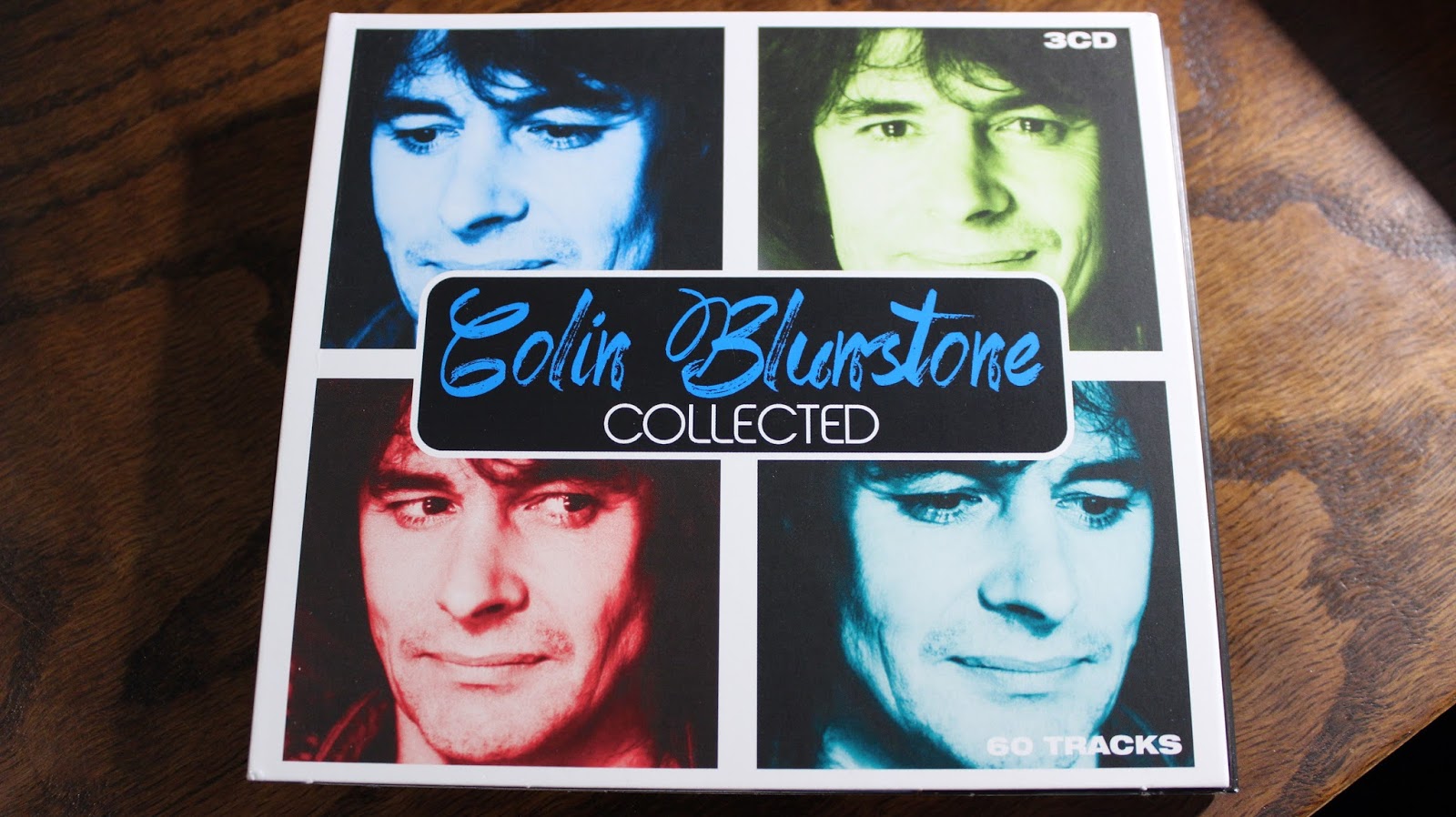
I think I neglected to mention this, but when I pre-ordered the book, I also ordered Colin Blunstone's Collected set:


For this project, the primary goal is to learn Mike Vicker's parts in songs like "Smokey Day" and "I Know She Will." I've been practicing nearly every day for a week, but I know only three notes so far (Bb, A, and G), so it'll be a while before I'm proficient enough to play those parts.
I think I neglected to mention this, but when I pre-ordered the book, I also ordered Colin Blunstone's Collected set:
Earlier this month, the price of one of the flutes I've been looking at dropped something like $80, so I bought a flute too:

Sunday, March 26, 2017
"She Does Everything for Me"
I listened to the I Love You album to-day, and I remembered something I noticed in "She Does Everything for Me" a couple months ago (more like half a year; it was in August) that I neglected to write about.
The first line is "There is nothing to say; it's all been said," and that "said" has a melisma. It's sung to the notes E F# E D. Because it's sung to more than one note, there's almost a musical representation of "all" having "been said." It's as if each note to which "said" is sung represents a past conversation.
The first line is "There is nothing to say; it's all been said," and that "said" has a melisma. It's sung to the notes E F# E D. Because it's sung to more than one note, there's almost a musical representation of "all" having "been said." It's as if each note to which "said" is sung represents a past conversation.
Subscribe to:
Comments (Atom)